What is terroir
In a nutshell, terroir is the phenomenon when climate, soil, grape variety, rootstock and cultural practices converge in harmony, the vine exudes the full phenotype, and the extraordinary wines resulting from such sense of place, are an expression of terroir.The Quatro Terras four hectares property is composed of four contiguous plots of land with a thermal sum of efficacy of ~2000 degree-days ‘C’ emulating Bordeaux and the Napa Valley climates.
The land is divided in the middle by an east-west seasonal creek, separating two opposite slopes on the north side of a chestnut grove with a narrow meadow strip along a seasonal creek forming a land saddle.
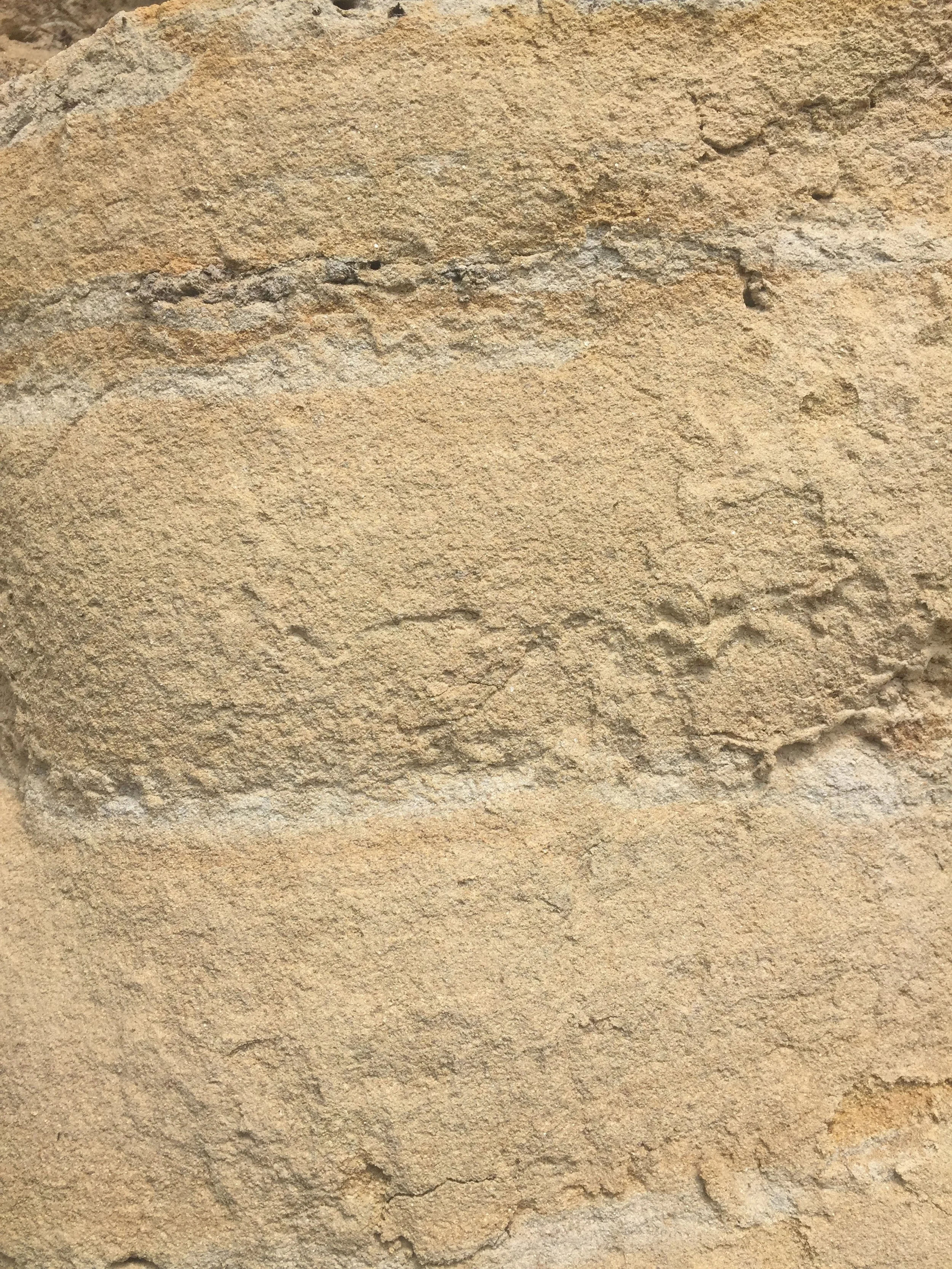
The north half of the property includes a 20% south slope, consisting of Olivine blotched Rhyolitic volcanic Tufa, with ~15% weathering shale pebbles, and aluminum rich Montmorillonite (aka Bentonite), ~10-15cm blue clay layers in the C horizon.
The antibacterial blue clay, dating back to the Triassic period (Over 200 million years ago), contains chemically reduced Fe2+ iron, as opposed to the oxidizing Fe3 form, which provides the familiar red color associated with soil. - Additionally, the doughy blue clay that remains moist underground through summer, can accumulate concentrations of different minerals deposited from the upper soil, that would otherwise, permeate below the root zone and be lost by gravity.
The south half includes two 10% Northwest sloping parcels, separated by a chestnut grove. - The soils are acidic light beige quartzite loess, interleaved with potassium rich ~5 to 10mm Illite clay layers that turn greenish-charcoal when wet.
The calcareous north half is planted with Merlot and Cabernet Franc, whereas the acidic south parcels are planted with Cabernet Sauvignon and Roussanne, aiming to produce five distinct boutique wines, - three reds (trilogy), one rose, and one white.